
 1 (Medium).jpg)
-
![qxif-newspaper]() Audience Award Winner of the Adriatic Festival Network at LIFFe 2025
Audience Award Winner of the Adriatic Festival Network at LIFFe 2025 Maldoror
Belgium, France, 2024, 155'
Directed by: Fabrice du Welz
Screenplay: Fabrice du Welz, Domenico La Porta
Cinematography : Manu Dacosse
Editing : Nico Leunen
Cast: Anthony Bajon (Paul Chartier), Alba Gaïa Bellugi (Jeanne »Gina« Ferrara), Alexis Manenti (Luis Catano), Sergi López (Marcel Dedieu), Laurent Lucas (Charles Hinkel), David Murgia (Didier Renard), Béatrice Dalle (Rita), Lubna Azabal (Mme Santos), Jackie Berroyer (Jack Dolman), Mélanie Doutey (Juge Remacle), Félix Maritaud (Roberto Santos)
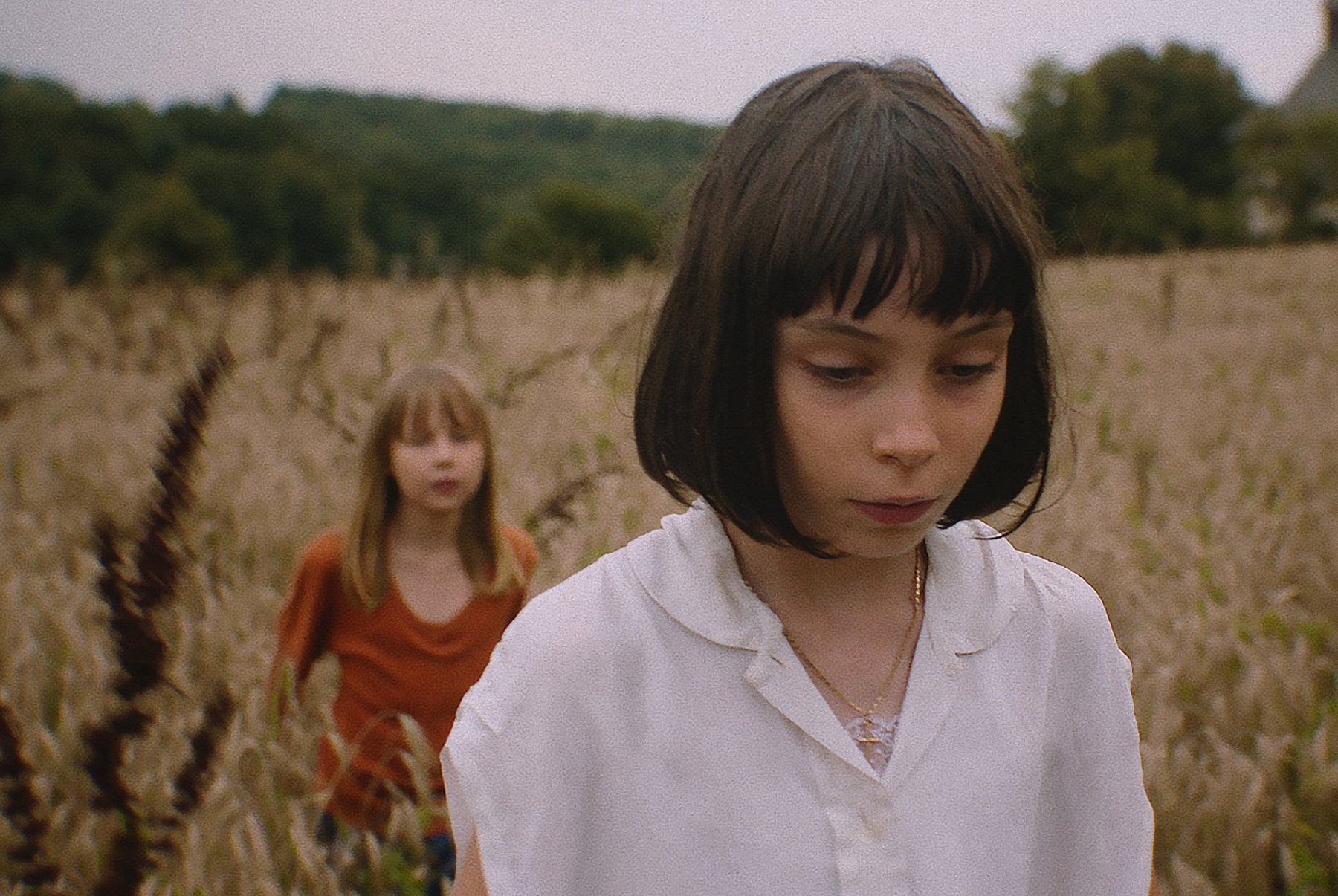
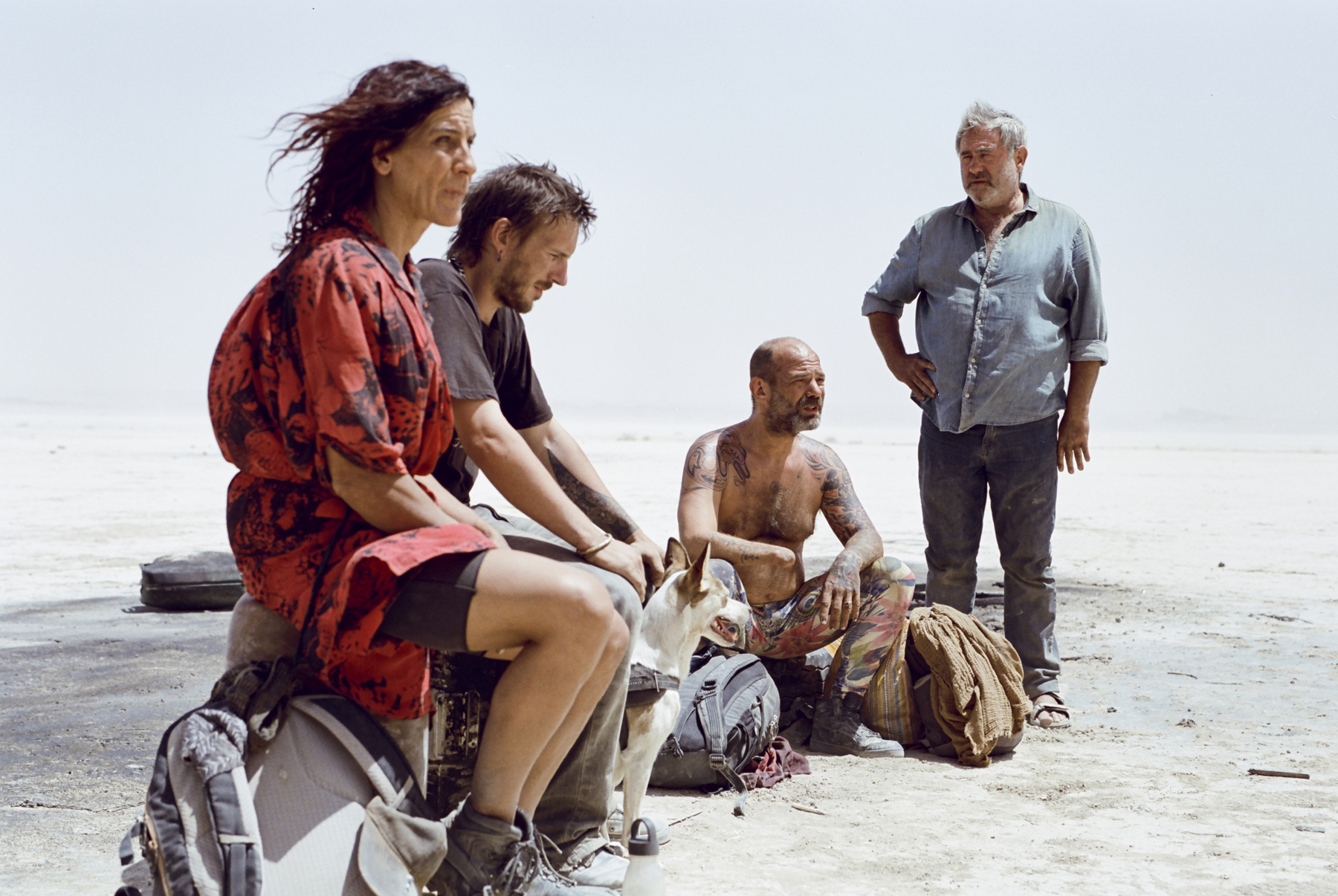
Du Welz’s latest work is a police film, a naturalistic fresco that takes us to the heart of the Sicilian community in Charleroi in the middle of the 1990s, largely inspired by the case of the paedophile serial killer Marc Dutroux.Paul Chartier is an impulsive young police recruit with a troubled past – his father was a convict and his mother a prostitute. But he buried those memories long ago. Now he navigates deftly between his professional ambitions and the extended Sicilian family he is preparing to marry into. When two girls go missing, the idealistic Paul is assigned to “Maldoror”. This secret unit has been set up to monitor a dangerous sex offender. When the operation fails, fed up with the limits of the legal system and increasingly obsessed with the case which he is sure is a part of something much larger, Chartier embarks on a solitary hunt to bring down the culprits.
"My intention is to explore the nature of evil and the quest for justice through realistic and evocative fiction. I wanted to probe the darkest aspects of the human soul and offer a profound reflection on powerlessness in the face of institutional dysfunction. Through the character of Paul Chartier, I wanted to approach resilience, obsession, blindness and the will to change things against all odds. For me, Maldoror is a turning point, designed to shed light on a societal trauma and offer a fresh perspective on our ability to confront evil."
Fabrice du WelzFabrice du WelzBorn in 1972 in Belgium. Du Welz studied at the Conservatory of Dramatic Arts in Liège and at INSAS, a film school in Brussels. In the 1990s he directed many Super 8 films and wrote humorous sequences for Canal +. He rose to prominence already with his 1999 short, A Wonderful Love. His feature debut, The Ordeal, screened at the 2004 Cannes Film Festival.
Filmography (selection)
2004 Calvaire (The Ordeal)
2008 Vinyan
2014 Alléluia (Alleluia)
2016 Message from the King
2019 Adoration
2024 La Passion selon Béatrice (The Passion According to Béatrice)
2024 Maldoror
The Network of Festivals in the Adriatic Region is supported by the MEDIA sub-programme of Creative Europe. -
![qxif-newspaper]() Free screenings of regional films as part of the 4th Winter Edition of the Network of Festivals in the Adriatic Region between 22 January and 5 February
Free screenings of regional films as part of the 4th Winter Edition of the Network of Festivals in the Adriatic Region between 22 January and 5 February -
![qxif-newspaper]() 37th Ljubljana International Film Festival – Liffe, 11–22 November 2026
37th Ljubljana International Film Festival – Liffe, 11–22 November 2026 -
![qxif-newspaper]() Fabrice du Welz’s Maldoror wins the Audience Award of the Network of Festivals in the Adriatic region
Fabrice du Welz’s Maldoror wins the Audience Award of the Network of Festivals in the Adriatic region -
![qxif-newspaper]() AWARD WINNERS
AWARD WINNERS -
![qxif-newspaper]() Closing Night of LIFFe and the Announcement of Award Winners
Closing Night of LIFFe and the Announcement of Award Winners -
![qxif-newspaper]() Green Skills Accelerator at LIFFe: Tools, Practices and Commitments for a More Sustainable Culture
Green Skills Accelerator at LIFFe: Tools, Practices and Commitments for a More Sustainable Culture -
![qxif-newspaper]() And now... for our English-speaking visitors
And now... for our English-speaking visitors -
![qxif-newspaper]() Notice for LIFFe visitors: Access to venues during the Slovenian Wine Festival
Notice for LIFFe visitors: Access to venues during the Slovenian Wine Festival

Ljubljana International Film festival
Stories on Both Sides of the Ocean
Retrospective
Kelly Reichardt has established herself as a seminal figure in contemporary American independent cinema. She is a filmmaker who persistently directs her gaze elsewhere – to the margins and the details of daily living, unearthing the overlooked, the marginalized, the invisible. Within the context of American mythology, which she subtly yet consistently undermines, these are stories of women, the working class, the barely visible footprints of indigenous peoples, the lively traces of animals that profoundly affect the nature of her images, and above all, the long takes of landscape that invariably highlight both human alienation and our inherent inalienability from the world. Reichardt, who was born and raised in the perilous swamps of Florida, chose the Oregon landscape as the backdrop for her vision of American society, and later moved there herself.
The urban peripheries used as settings in her films are surrounded on one side by rocky high deserts and on the other by deep conifer forests, whose vastness faithfully reflects her cinematic narratives. A foremost example here is Reichardt’s debut film, River of Grass (1994), set in a sleepy Florida suburb. Echoing the great American Bonnie and Clyde legend, a bored and listless housewife Cozy sets off on a journey with Lee, an aimless young dropout – in a road movie without the road, a love story without the love, and a crime story without the crime. Reichardt adopts a realistic filmmaking style through the use of non-professional actors, actual locations, and absence of any major stylistic interventions in cinematography.
Although receiving plaudits at Sundance with her debut film, Reichardt spent the next twelve years trying to finance a second film: Old Joy (2006) marked a stylistic shift for the filmmaker, one that she largely continues to employ today – a neo-neorealist style, defined by an in-depth dialogue with nature, and enhanced through Slow Cinema pacing, a detail-picking pace that allows for the emergence of the unspoken through a carefully constructed gaze, while viewer-wise opening up a field of empathy and sensitivity in relation to the film image. The screenplay for Old Joy, a film about estranged friends, was written in partnership with John Raymond, an Oregon-based author who went on to become the director's indispensable collaborator. Reichardt decided to edit the film herself, and has continued to serve as her own editor in all her subsequent projects.
There followed another road movie without the road or destination – Wendy and Lucy (2008), Reichardt’s first collaboration with the actress Michelle Williams. Set during an economic crisis, the film’s protagonist Wendy travels to Alaska with her (the director's) dog Lucy in search of a better life. Casting Williams, the director went on to create a whole range of female characters, including Certain Women (2016) and Showing Up (2022), banking on Williams’ talent for extremely ruminative deadpan performance in relation to the emotions and social (sexual) positions of her characters.
On yet another endless road, Meek's Cutoff (2010) depicts a group of settlers lost in the middle of the Oregon countryside. Here, the filmmaker draws on a unique form of American mythology – the Western. But instead of an action spectacle, Reichardt opts for a careful study of gender and myth through a decolonizing and feminist perspective. In similar fashion, she reappropriates and redefines Western tropes in the film The First Cow (2019), shattering the myths of neoliberal America with a gentle tale of male friendship and the relationship between ownership, capital, and theft.
Reichardt's affinity for exploring film genres is further reflected in Night Moves (2013) and The Mastermind (2025). However, echoing her use of the Western, the filmmaker shows that genre tropes are merely a starting point for her to examine perhaps unexpected thematic and conceptual points – the ecological thriller thus becomes a quiet meditation on guilt, and a heist film becomes a sensitive study of character and coincidence, as well as cinematic colour and composition. In subverting all cinematic expectations and paying scrupulous attention to the medium itself, Reichardt has solidified in every way her position as a giant of American and world cinema.
Anja Banko
The Kelly Reichardt Retrospective has been organised in cooperation with the Slovenian Cinematheque and the Kino Otok – Isola Cinema International Film Festival.
.png)
_1200.webp&dirs=banners)
.jpg)
_1772.webp&dirs=banners)

We enter the hall filled with excitement, full of anticipation, and we exit silently or loudly, sometimes relieved, happy, sad, disappointed, enthusiastic, but definitely different to who we were on arrival. The film touches us in one way or another, and the more we let ourselves go, the more worlds and lives we can experience vicariously

Jure Novak
Director General of Cankarjev dom
HIGHLIGHTS
35th Liffe in Numbers
NEWS - 15.10.2025
Z vami delimo nekaj novega!!
Lorem ipsum dolor sit amet, consectetuer adipiscing elit. Maecenas porttitor congue massa. Fusce posuere, magna sed pulvinar ultricies, purus lectus malesuada libero, sit amet commodo magna eros quis urna.
Nunc viverra imperdiet enim. Fusce est. Vivamus a tellus.
Pellentesque habitant morbi tristique senectus et netus et malesuada fames ac turpis egestas. Proin pharetra nonummy pede. Mauris et orci.
Aenean nec lorem. In porttitor. Donec laoreet nonummy augue.
Suspendisse dui purus, scelerisque at, vulputate vitae, pretium mattis, nunc. Mauris eget neque at sem venenatis eleifend. Ut nonummy.






























36th Liffe Ljubljana
International Film Festival



@ 2025 Liffe. Vse pravice pridržane.
Festival
Sponsors and partners